


AZ-140 Practice Exam Tests Latest Updated on May-2026
Pass AZ-140 Exam in First Attempt Guaranteed Dumps!
The AZ-140 Exam focuses on testing the candidate's knowledge and understanding of virtual desktop infrastructure on Azure, including Azure Virtual Desktop (formerly known as Windows Virtual Desktop) and Remote Desktop Services. It covers the topics of deploying and managing virtual machines, configuring network connectivity, implementing and managing user profiles and policies, and monitoring and optimizing virtual desktop performance.
NEW QUESTION # 19
You need to configure the user settings of Admin1 to meet the user profile requirements.
What should you do?
- A. Modify the HKLM\SOFTWARE\FSLogix\ODFC registry settings.
- B. Modify the membership of the FSLogix ODFC Exclude List group.
- C. Modify the membership of the FSLogix Profile Exclude List group.
- D. Modify the HKLM\SOFTWARE\FSLogix\Profiles registry settings.
Answer: C
Explanation:
Reference:
https://docs.microsoft.com/en-us/fslogix/overview
https://docs.microsoft.com/en-us/fslogix/configure-profile-container-tutorial#set-up-include-and-exclude- usergroups
Topic 3, Northwind Traders
Overview
Northwind Traders is a manufacturing company based in New York City.
Existing Environment
Identity Environment
The on-premises network contains an Active Directory Domain Services (AD DS) domain named northwindtraders.com.
Northwind Traders has a Microsoft Entra tenant and a Microsoft Entra Domain Services managed domain.
The northwindtraders.com domain syncs with the Microsoft Entra tenant.
Virtual Machines
The company has an on-premises Hyper-V virtual machine named VM1 that has the following configurations:
* Generation: 1
* Disk size: 2 TB
* Disk format: VHDX
* Disk type: Dynamically expanding
Cloud Services
Norihwind Traders has a Microsoft 365 E5 subscription. The subscription contains 500 users that are assigned Microsoft 365 E5 licenses.
The company has an Azure subscription that contains the resources shown in the following table.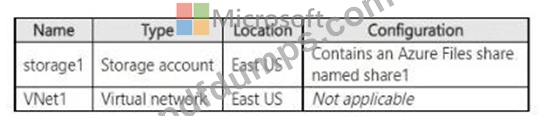
Both subscriptions ate linked to the Microsoft Entra tenant.
Requirements
Planned Changes
Northwind Traders identifies the following planned changes:
* Deploy an Azure Virtual Desktop host pool that will contain 10 session hosts joined to the Microsoft Entra Domain Services managed domain.
* Configure VM1 as the source image for the Azure Virtual Desktop deployment and upload the image to Azure.
* The Azure Virtual Desktop deployment will provide access to a custom app named Appl.
Performance Requirements
Northwind Traders identifies the following performance requirements:
* Each Azure Virtual Desktop session host must support 15 user sessions.
* Each new user session must be assigned to a single session host until the maximum session limit is reached for that host.
Application Requirements
Northwind Traders identifies the following application requirements:
* Microsoft OneDrive must launch when users connect to a RemoteApp session in Azure Virtual Desktop.
* App1 requires a desktop resolution of 1280 x 1024.
* Administrative effort must be minimized.
Disaster Recovery Requirements
Northwind Traders identifies the following disaster recovery requirements for the Azure Virtual Desktop deployment:
* Minimize outages if an Azure region fails.
* Minimize the recovery time objective (RTO).
* Minimize administrative effort in the event of a failover.
Security Requirements
Northwind Traders identifies the following security requirements:
* When users sign in to the Azure Virtual Desktop deployment by using the Azure Virtual Desktop client they must authenticate by using their Microsoft Entra username and password only.
* When users sign in to the Azure Virtual Desktop deployment by using a web browser, they must authenticate by using the Microsoft Authenticator app.
* All the Azure Virtual Desktop session hosts deployed by using the VM1 source image must be onboarded to Microsoft Defender for Endpoint.
* The client version and operating system used to connect to the session hosts must be logged.
* The solution must follow the principle of least privilege.
Networking Requirements
The Azure Virtual Desktop session hosts must be able to access the resources on the on-premises network.
Northwind Traders identifies the following user profile requirements:
* Users must be able to access share1 by using their Microsoft Entra account.
* Azure Virtual Desktop user profiles must be managed by using FSLogix.
* All user profiles must be stored in share1.
NEW QUESTION # 20
You need to configure the virtual machines that have the Pool1 prefix. The solution must meet the technical requirements.
What should you use?
- A. a Windows Virtual Desktop automation task
- B. Azure Automation
- C. Service Health in Azure Monitor
- D. Virtual machine auto-shutdown
Answer: A
Explanation:
Reference:
https://docs.microsoft.com/en-us/azure/logic-apps/create-automation-tasks-azure-resources
Topic 2, Litware, Inc
To start the case study
To display the first question in this case study, click the Next button. Use the buttons in the left pane to explore the content of the case study before you answer the questions. Clicking these buttons displays information such as business requirements, existing environment, and problem statements. If the case study has an All Information tab, note that the information displayed is identical to the information displayed on the subsequent tabs. When you are ready to answer a question, click the Question button to return to the question.
Overview
Litware, Inc. is a pharmaceutical company that has a main office in Boston, United States, and a remote office in Chennai, India.
Existing Environment. Identity Environment
The network contains an on-premises Active Directory domain named litware.com that syncs to an Azure Active Directory (Azure AD) tenant named litware.com.
The Azure AD tenant contains the users shown in the following table.
All users are registered for Azure Multi-Factor Authentication (MFA).
Existing Environment. Cloud Services
Litware has a Microsoft 365 E5 subscription associated to the Azure AD tenant. All users are assigned Microsoft 365 Enterprise E5 licenses.
Litware has an Azure subscription associated to the Azure AD tenant. The subscription contains the resources shown in the following table.
Litware uses custom virtual machine images and custom scripts to automatically provision Azure virtual machines and join the virtual machines to the on-premises Active Directory domain.
Network and DNS
The offices connect to each other by using a WAN link. Each office connects directly to the internet.
All DNS queries for internet hosts are resolved by using DNS servers in the Boston office, which point to root servers on the internet. The Chennai office has caching-only DNS servers that forward queries to the DNS servers in the Boston office.
Requirements. Planned Changes
Litware plans to implement the following changes:
Deploy Windows Virtual Desktop environments to the East US Azure region for the users in the Boston office and to the South India Azure region for the users in the Chennai office.
Implement FSLogix profile containers.
Optimize the custom virtual machine images for the Windows Virtual Desktop session hosts.
Use PowerShell to automate the addition of virtual machines to the Windows Virtual Desktop host pools.
Requirements. Performance Requirements
Litware identifies the following performance requirements:
Minimize network latency of the Windows Virtual Desktop connections from the Boston and Chennai offices.
Minimize latency of the Windows Virtual Desktop host authentication in each Azure region.
Minimize how long it takes to sign in to the Windows Virtual Desktop session hosts.
Requirements. Authentication Requirements
Litware identifies the following authentication requirements:
Enforce Azure MFA when accessing Windows Virtual Desktop apps.
Force users to reauthenticate if their Windows Virtual Desktop session lasts more than eight hours.
Requirements. Security Requirements
Litware identifies the following security requirements:
Explicitly allow traffic between the Windows Virtual Desktop session hosts and Microsoft 365.
Explicitly allow traffic between the Windows Virtual Desktop session hosts and the Windows Virtual Desktop infrastructure.
Use built-in groups for delegation.
Delegate the management of app groups to CloudAdmin1, including the ability to publish app groups to users and user groups.
Grant Admin1 permissions to manage workspaces, including listing which apps are assigned to the app groups.
Minimize administrative effort to manage network security.
Use the principle of least privilege.
Requirements. Deployment Requirements
Litware identifies the following deployment requirements:
Use PowerShell to generate the token used to add the virtual machines as session hosts to a Windows Virtual Desktop host pool.
Minimize how long it takes to provision the Windows Virtual Desktop session hosts based on the custom virtual machine images.
Whenever possible, preinstall agents and apps in the custom virtual machine images.
NEW QUESTION # 21
You have an Azure Virtual Desktop deployment.
You plan to create the host pools shown in the following table.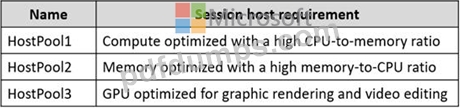
You need to recommend the virtual machine size for each host pool to meet the session host requirements.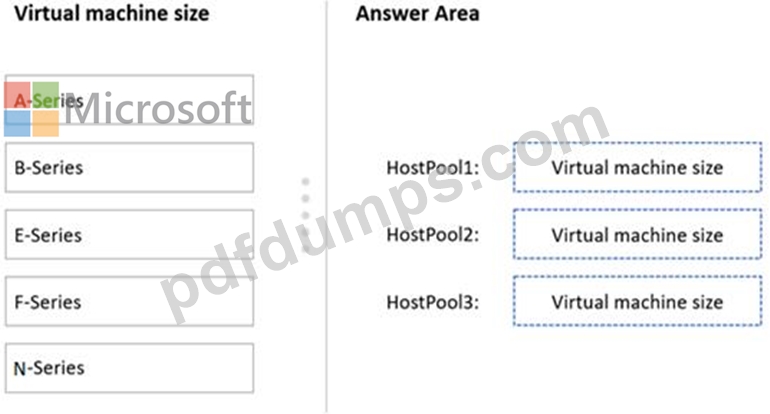
Answer:
Explanation: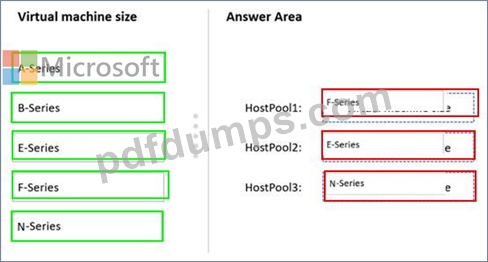
NEW QUESTION # 22
Which host pool design and which service should you configure to meet the disaster recovery requirements? To answer, drag the appropriate solution to the correct requirements. Each solution may be used once, more than once, or not at all. You may need to drag the split bar between panes or scroll to view content NOTE: Each correct selection is worth one point.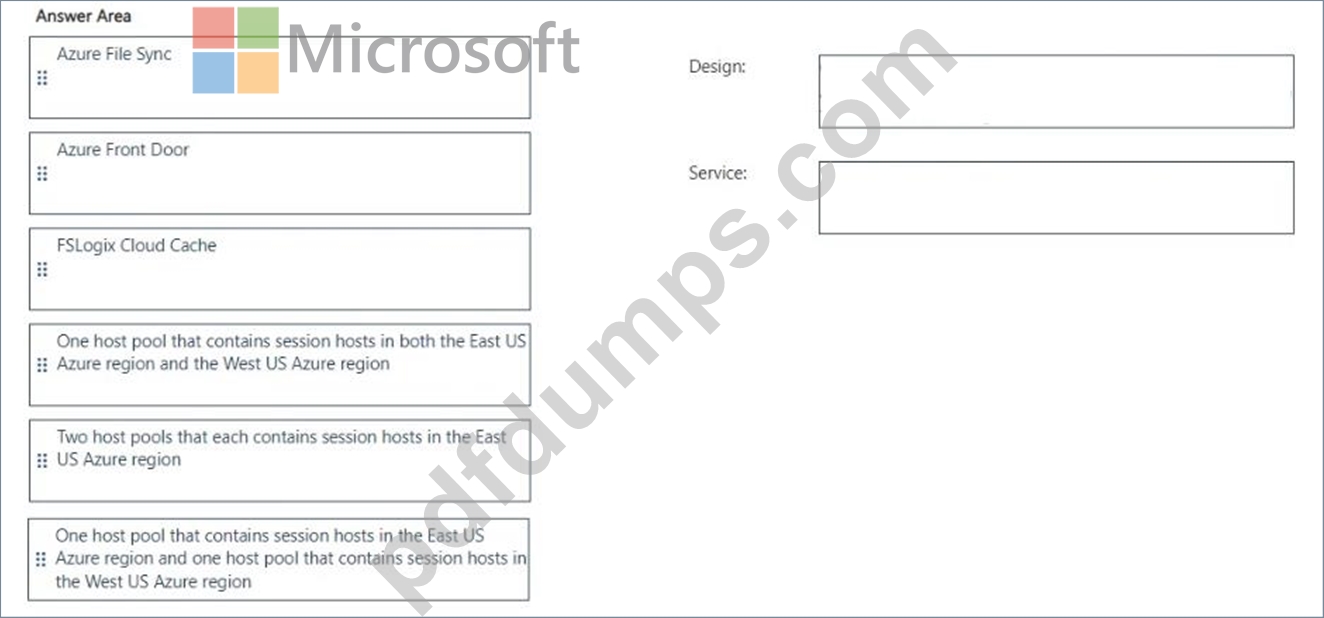
Answer:
Explanation: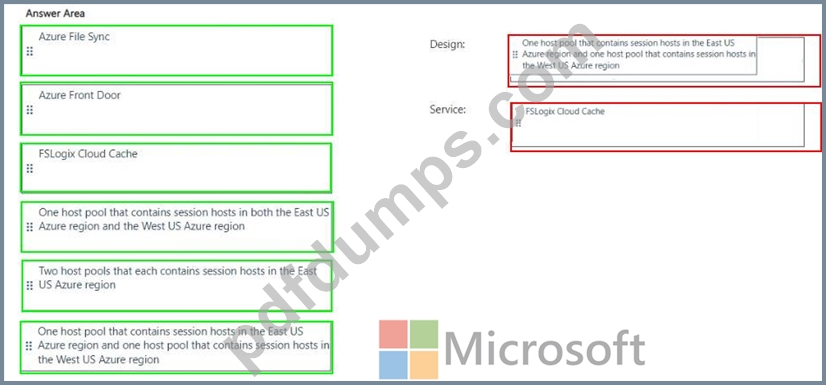
NEW QUESTION # 23
Your company has the offices shown in the following table.
The company has an Azure Active Directory (Azure AD) tenant named contoso.com that contains a user named User1.
Users connect to a Windows Virtual Desktop deployment named WVD1. WVD1 contains session hosts that have public IP addresses from the 52.166.253.0/24 subnet.
Contoso.com has a conditional access policy that has the following settings:
* Name: Policy1
* Assignments:
* Users and groups: User1
* Cloud apps or actions: Windows Virtual Desktop
Access controls:
* Grant: Grant access, Require multi-factor authentication
Enable policy: On
For each of the following statements, select Yes if the statement is true. Otherwise, select No.
NOTE: Each correct selection is worth one point.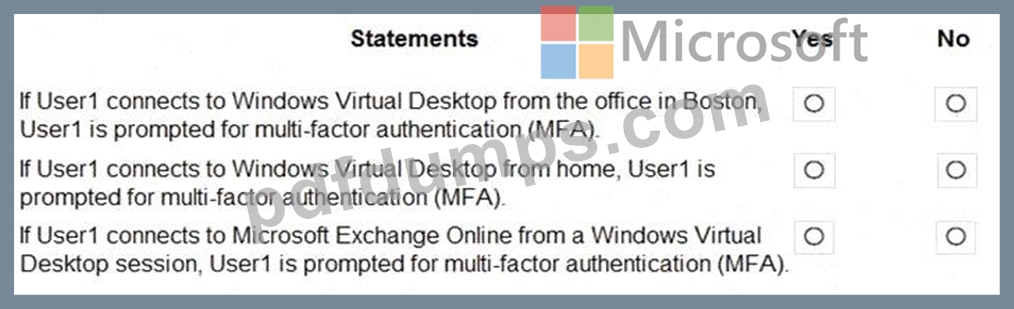
Answer:
Explanation: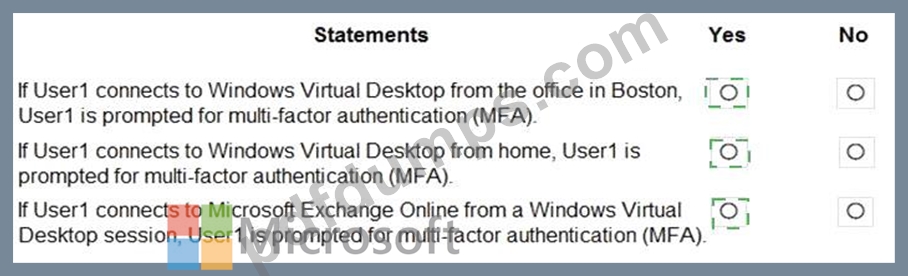
Explanation: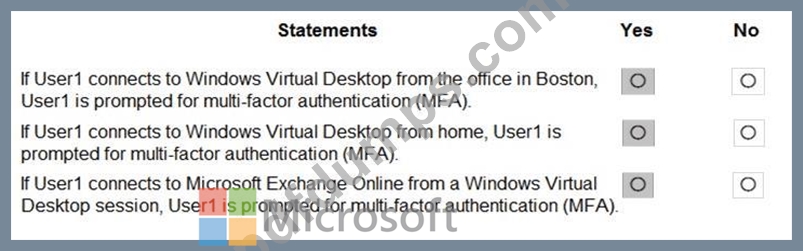
Reference:
https://docs.microsoft.com/en-us/azure/active-directory/authentication/tutorial-enable-azure-mfa
NEW QUESTION # 24
Which type of host pool and load balancing algorithm should you configure to meet the performance requirements? To answer, select the appropriate options in The answer area.
NOTE: Each correct selection is worth one point.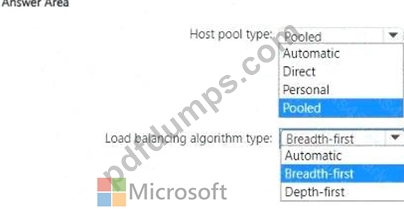
Answer:
Explanation: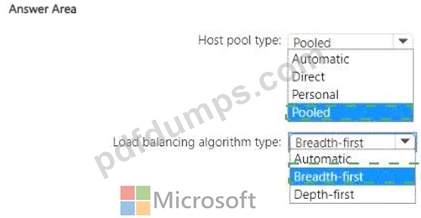
Explanation: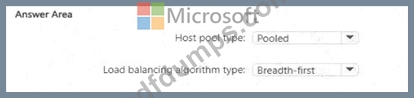
NEW QUESTION # 25
You have an Azure Virtual Desktop host pool in the US East Azure region.
You need to ensure that the host pool can fail over to the US West Azure region.
What should you do first?
- A. Create a new host pool.
- B. Create a virtual machine snapshot of each session host.
- C. Create an Azure Storage account that uses geo-redundant storage (GRS).
- D. Create a Recovery Services vault.
Answer: D
Explanation:
Reference:
https://docs.microsoft.com/en-us/azure/site-recovery/azure-to-azure-tutorial-enable-replication
NEW QUESTION # 26
You have a Azure Virtual Desktop host pool named Pool1 that is integrated with an Azure Active Directory Domain Services (Azure AD DS) managed domain.
You need to configure idle session timeout settings for users that connect to the session hosts in Pool 1.
Solution: From the Azure portal you modify the Advanced settings in the RDP Properties of Pool1.
Does This meet the goal?
- A. Yes
- B. No
Answer: B
NEW QUESTION # 27
You have an on-premises network.
All users have computers that run Windows 10 Pro.
You plan to deploy Azure Virtual Desktop to meet the department requirements shown in the following table.
You need to recommend licenses for the departments. The solution must minimize costs.
Which license should you recommend for each department? To answer, select the appropriate options in the answer area.
NOTE: Each correct selection is worth one point.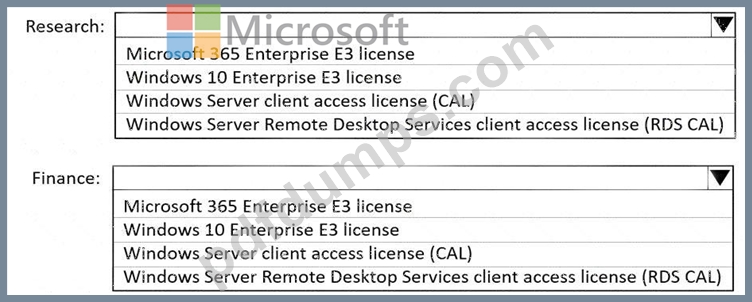
Answer:
Explanation: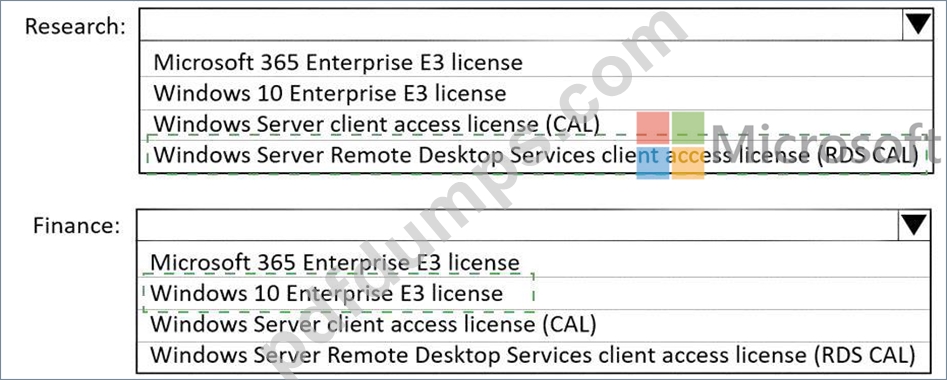
Explanation
Text, table, email Description automatically generated with medium confidence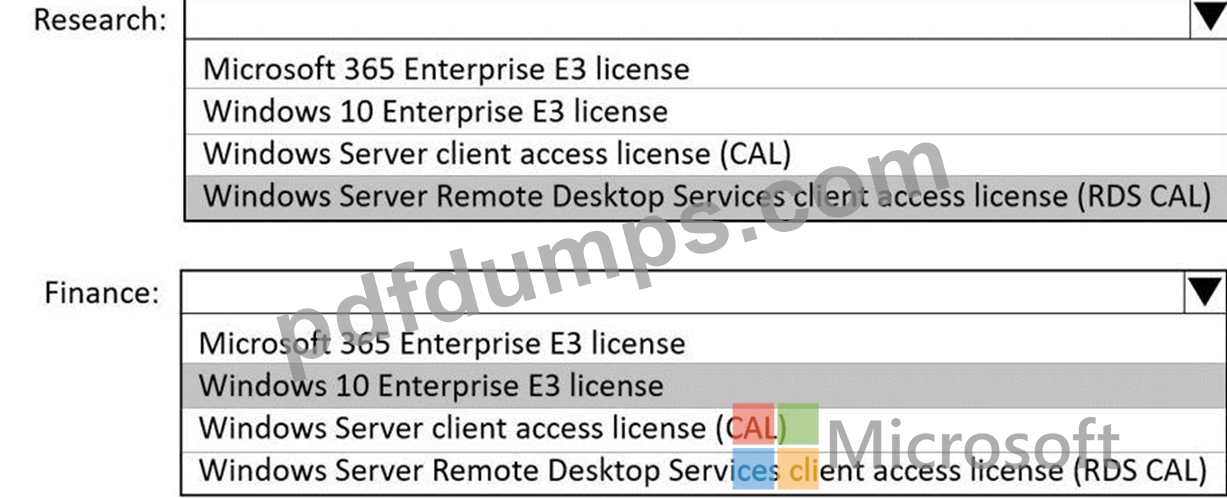
Reference:
https://docs.microsoft.com/en-us/azure/virtual-desktop/windows-10-multisession-faq
https://azure.microsoft.com/en-us/pricing/details/virtual-desktop/#pricing
NEW QUESTION # 28
You have an Azure Virtual Desktop deployment.
You have a Microsoft Entra tenant that contains the users shown in the following table.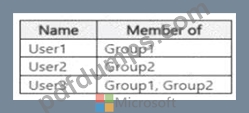
The users have smart devices that have the Microsoft Authenticator app installed. You create a Conditional Access policy that has the following settings:
* Name: CAPolicy1
* Assignments
o Users: Group1
o Target resources: All resources (formerly All cloud apps)
* Access controls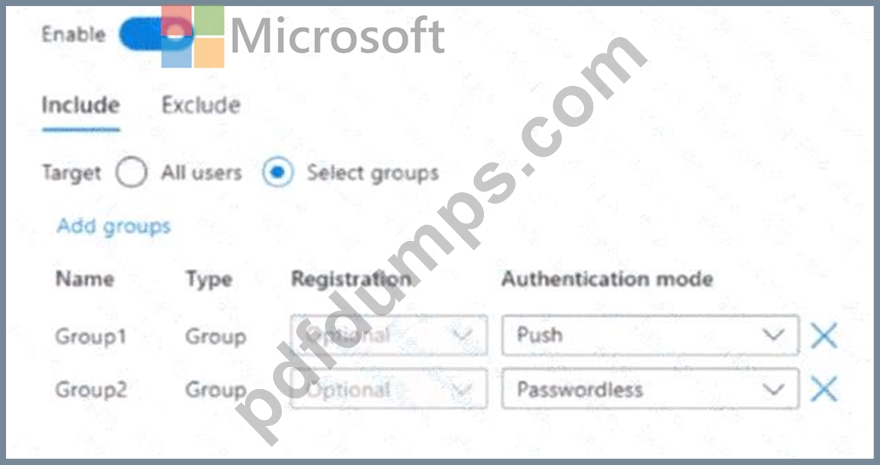
For each of the following statements, select Yes if the statement is true. Otherwise, select No.
NOTE: Each correct selection is worth one point.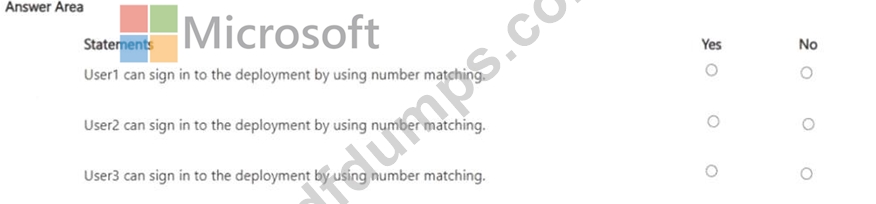
Answer:
Explanation: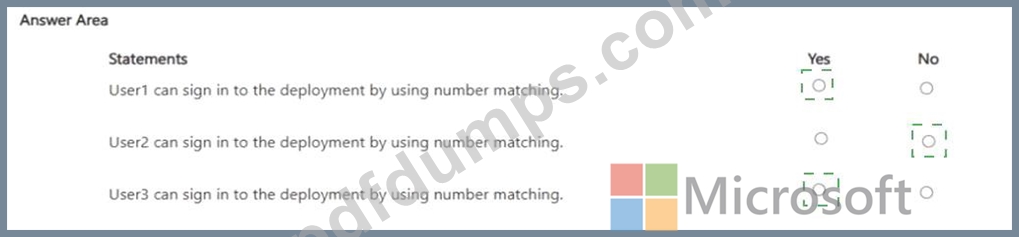
Explanation: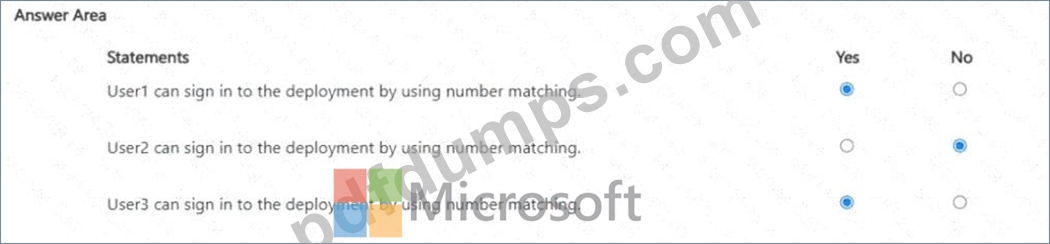
NEW QUESTION # 29
You have an Azure Virtual Desktop deployment that uses Azure Active Directory Domain Services (Azure AD DS). You have the following host pool:
- Name: Pool1
- Type: Personal
- Number of session hosts: 5
You plan to deploy two new session hosts to Pool1.
What should you do before you deploy the session hosts?
- A. Precreate a computer account in Azure AD DS.
- B. Create a scaling plan.
- C. Increase the maximum session limit.
- D. Create a registration key.
Answer: A
Explanation:
This is done by using the Add-AzDomainComputer cmdlet in PowerShell. After the computer accounts have been created, the new session hosts can be deployed.
https://docs.microsoft.com/en-us/azure/virtual-desktop/create-session-host-pools#precreate- computer-accounts-in-azure-ad-ds.
NEW QUESTION # 30
You need to configure the user settings of Admin1 to meet the user profile requirements.
What should you do?
- A. Modify the HKLM\SOFTWARE\FSLogix\ODFC registry settings.
- B. Modify the membership of the FSLogix Profile Exclude List group.
- C. Modify the membership of the FSLogix ODFC Exclude List group.
- D. Modify the HKLM\SOFTWARE\FSLogix\Profiles registry settings.
Answer: C
Explanation:
Explanation/Reference:
https://docs.microsoft.com/en-us/fslogix/overview
https://docs.microsoft.com/en-us/fslogix/configure-profile-container-tutorial#set-up-include-and-exclude-user- groups
NEW QUESTION # 31
-
Your on-premises network contains an Active Directory domain that syncs with an Azure AD tenant.
You have an Azure Virtual Desktop host pool that contains Windows 11 session hosts joined to the domain.
You need to configure Azure NetApp Files to store user profile containers.
Which four actions should you perform in sequence? To answer, move the appropriate actions from the list of actions to the answer area and arrange them in the correct order.
NOTE: More than one order of answer choices is correct. You will receive credit for any of the correct orders you select.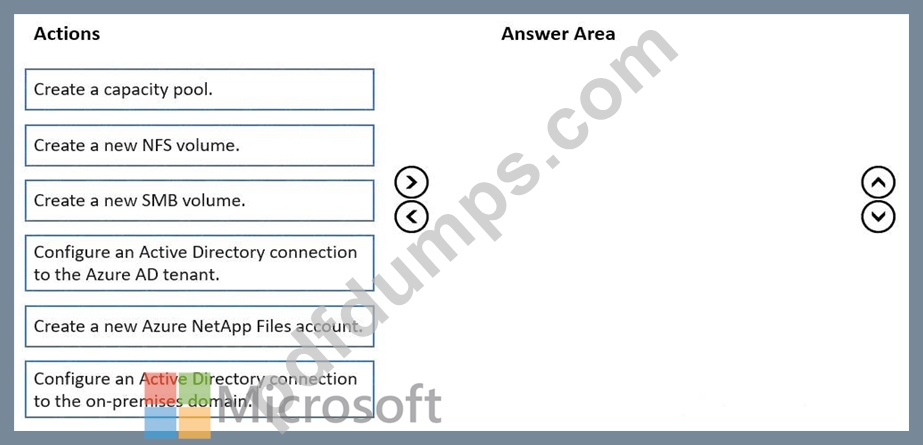
Answer:
Explanation: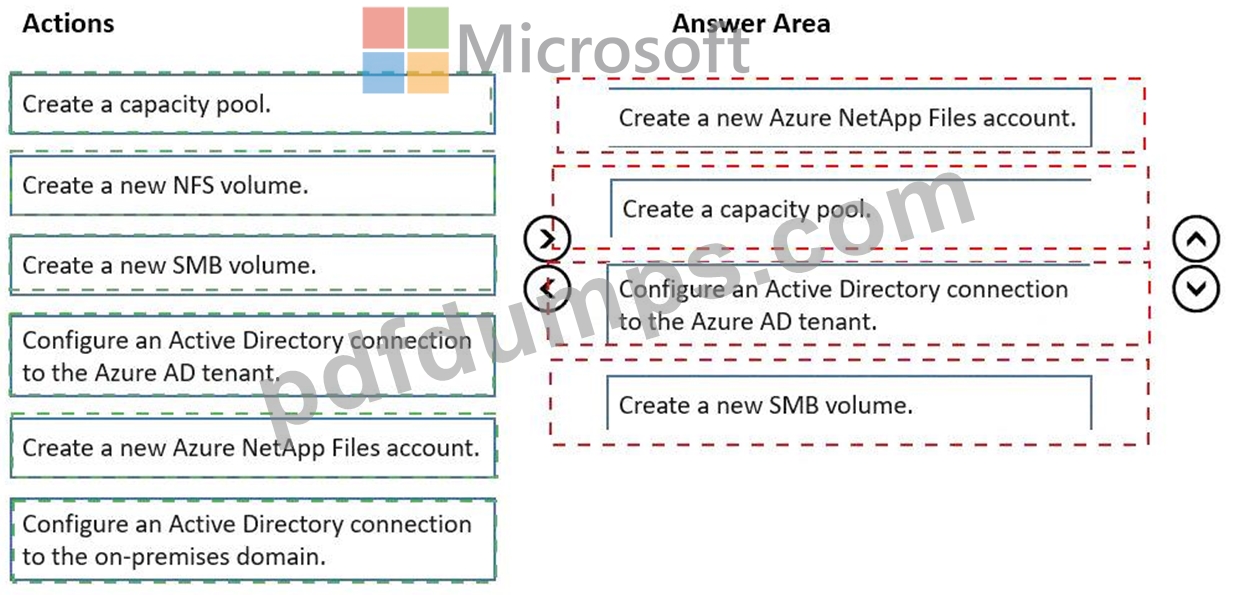
Explanation: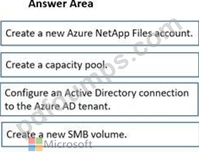
NEW QUESTION # 32 
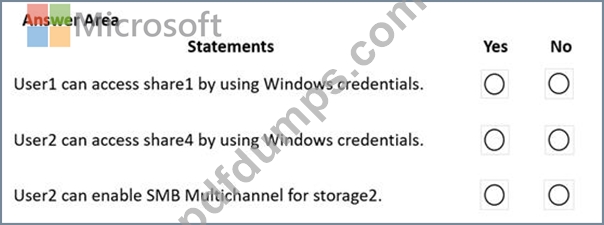
Answer:
Explanation: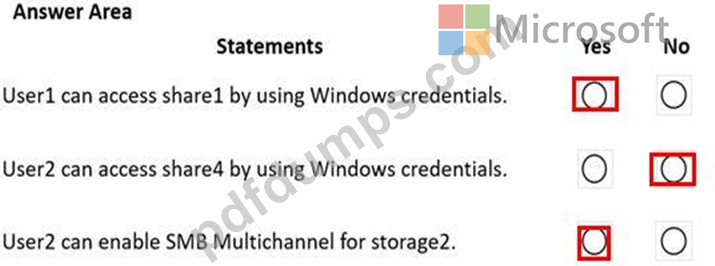
NEW QUESTION # 33
You are automating the deployment of an Azure Virtual Desktop host pool.
You deploy the Azure Resource Manager (ARM) template shown in the following exhibit.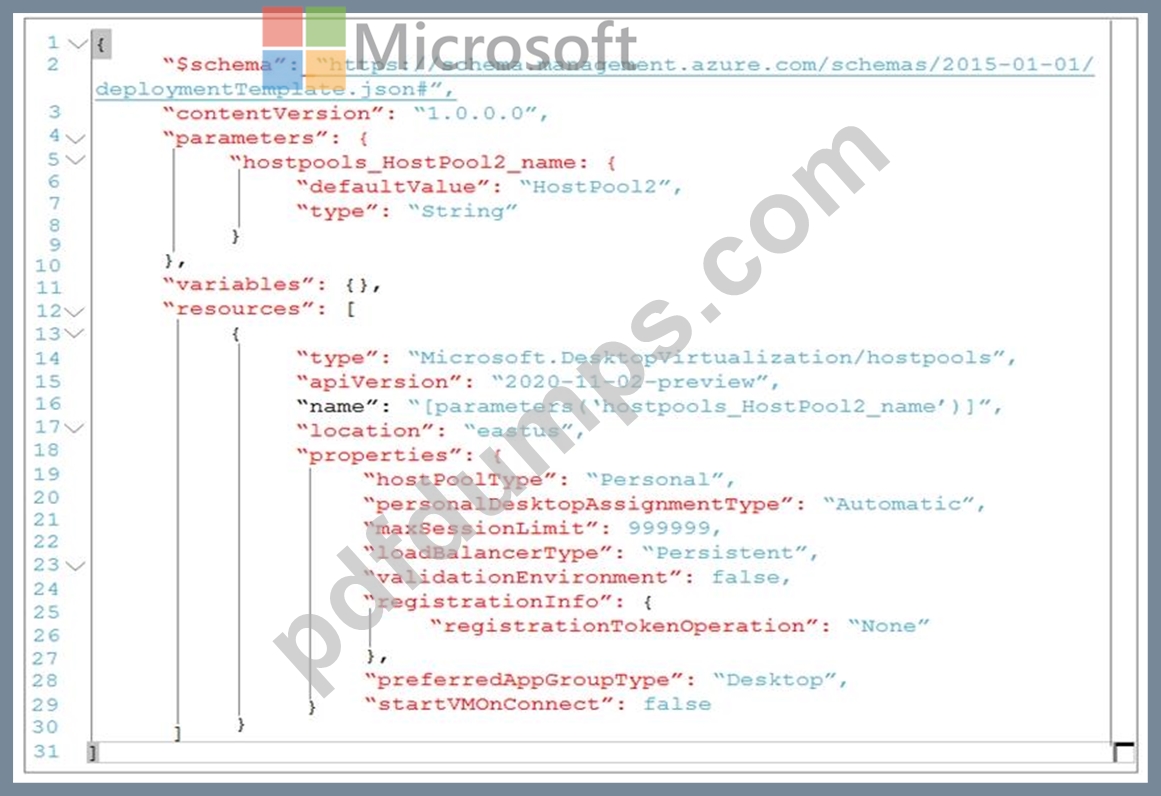
Use the drop-down menus to select the answer choice that completes each statement based on the information presented in the Dockerfile.
NOTE: Each correct selection is worth one point.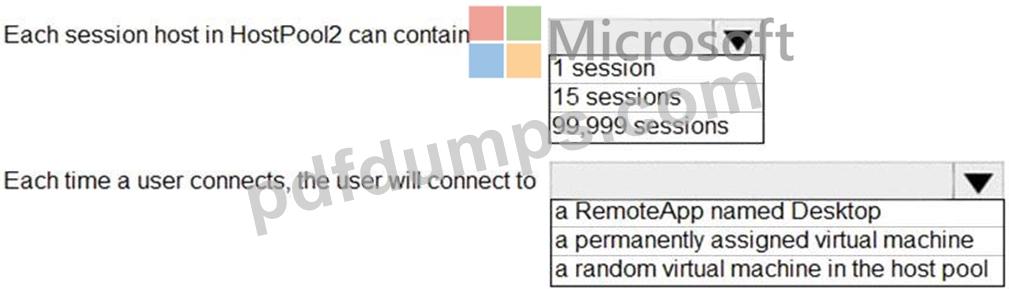
Answer:
Explanation:
Explanation
Graphical user interface, text, application Description automatically generated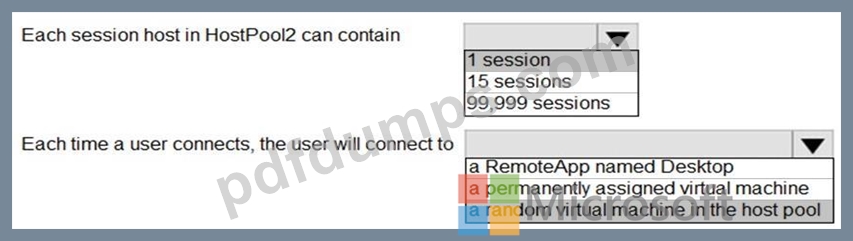
Reference:
https://docs.microsoft.com/en-us/azure/virtual-desktop/virtual-desktop-fall-2019/configure-host-pool-personal-de
NEW QUESTION # 34
You have an Azure Virtual Desktop deployment that contains the resources shown in the following table.
You have a Windows 11 device named Device1 that has Azure Command-Line Interface (CLI) installed.
You need to use Remote Desktop Connection (mstsc.exe) on Device1 to connect to Host1.
Which three actions should you perform in sequence? To answer, move the appropriate actions from the list of actions to the answer area and arrange them in the correct order.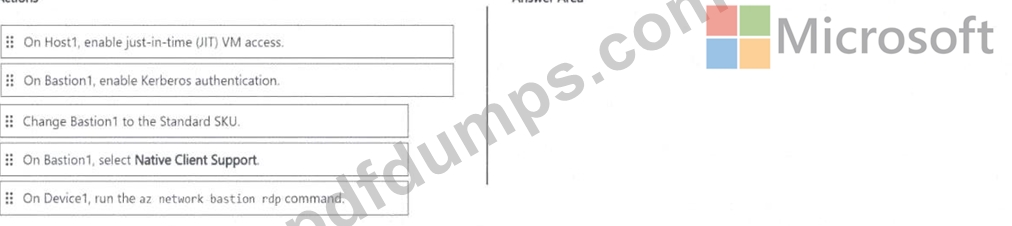
Answer:
Explanation: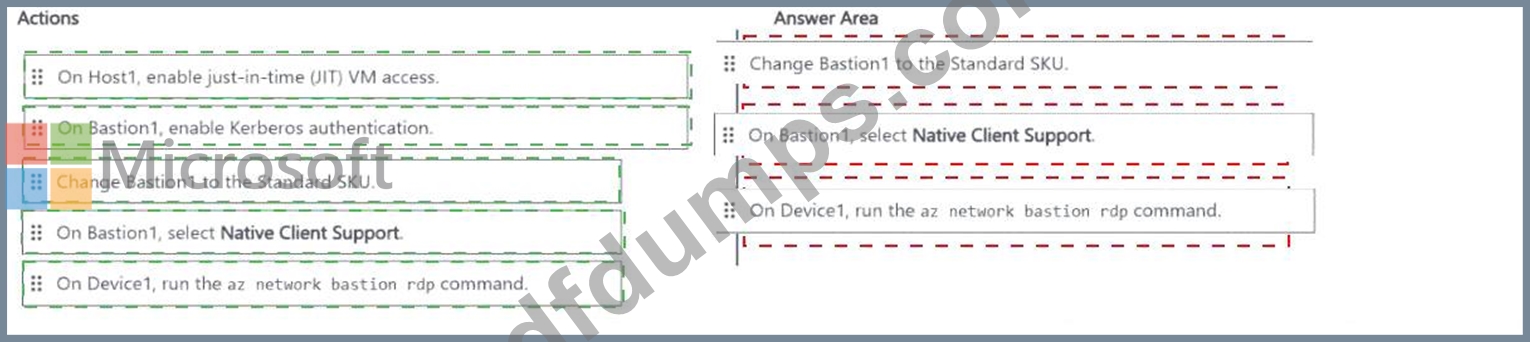
Explanation:
NEW QUESTION # 35
Hotspot Question
You have an Azure Virtual Desktop host pool that contains 20 Windows 11 session hosts.
You create a Windows Defender Application Control (WDAC) policy named Policy1.xml.
You need to deploy Policy1.xml to the session hosts.
How should you prepare the policy, and to where should you copy the policy? To answer, select the appropriate options in the answer area.
NOTE: Each correct selection is worth one point.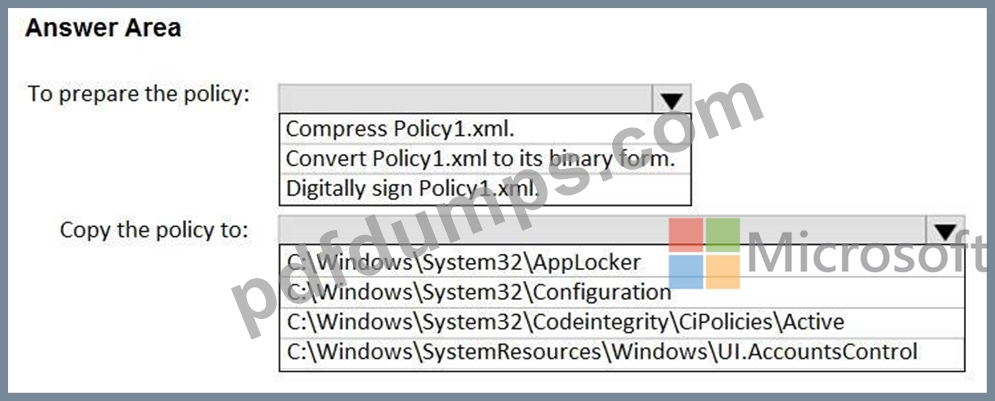
Answer:
Explanation: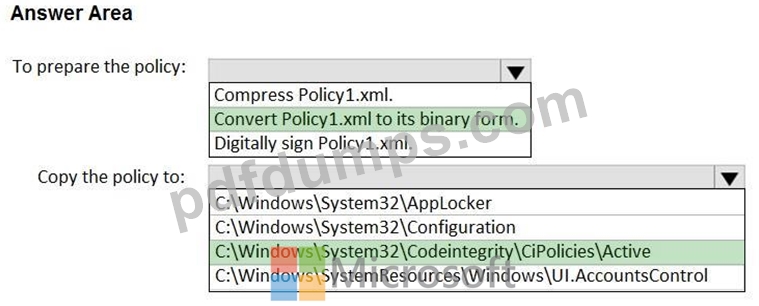
Explanation:
https://learn.microsoft.com/en-us/windows/security/application-security/application- control/windows-defender-application-control/deployment/wdac-deployment-guide
https://learn.microsoft.com/en-us/windows/security/application-security/application- control/windows-defender-application-control/deployment/deploy-wdac-policies-with-script
NEW QUESTION # 36
You have an Azure subscription that contains 500 users. The users are assigned Microsoft Office
365 E1 licenses.
You deploy an Azure Virtual Desktop solution that contains Windows 10 multi-session hosts and streams a custom remote app named App1.
You need to ensure that the users are licensed to stream App1. The solution must minimize costs.
Which license should you use?
- A. Microsoft 365 E5
- B. Windows 10 Enterprise E3
- C. a Remote Desktop Services (RDS) client access license (CAL)
- D. Office 365 E3
Answer: B
Explanation:
App-V client. The App-V client must be enabled on any client device on which apps will be run from the App-V server. These will be the Windows 10/11 Enterprise E3 devices.
Reference:
https://docs.microsoft.com/sv-se/windows/deployment/windows-10-enterprise-e3-overview
NEW QUESTION # 37
You have a Azure Virtual Desktop deployment that contains multiple host pools.
You need to create a PowerShell script to sign users out of a specific session host before you perform a maintenance task.
Which PowerShell module should you load in the script?
- A. Az.COMputC
- B. Az.DektopVirtualization
- C. Az.Automation
- D. Az.Maintenance
Answer: B
Explanation:
Reference:
https://docs.microsoft.com/en-us/powershell/module/az.desktopvirtualization/?view=azps-6.6.0#desktopvirtualization
https://techgenix.com/logging-off-and-removing-wvd-user-sessions/
NEW QUESTION # 38
You plan to deploy Windows Virtual Desktop.
You need to create Azure NetApp Files storage to store FSLogix profile containers.
Which four actions should you perform in sequence after you register the NetApp Resource Provider? To answer, move the appropriate actions from the list of actions to the answer area and arrange them in the correct order.
NOTE: More than one order of answer choices is correct. You will receive credit for any of the correct orders you select.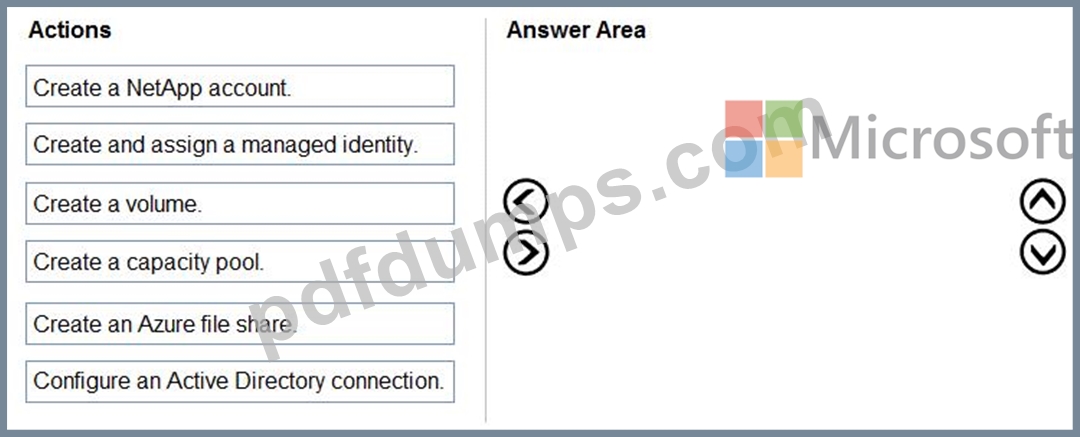
Answer:
Explanation: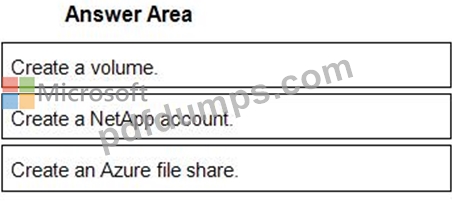
1 - Create a volume.
2 - Create a NetApp account.
3 - Create an Azure file share.
NEW QUESTION # 39
You have a Windows Virtual Desktop deployment.
You need to provide external users with access to the deployment. The external users have computers that run Windows 10 Pro and Windows 10 Enterprise. The users do not have the ability to install applications.
What should you recommend that the users use to connect to the deployment?
- A. Microsoft Edge
- B. Remote Desktop Manager
- C. Remote Desktop Connection
- D. RemoteApp and Desktop Connection
Answer: A
NEW QUESTION # 40
You have the Azure Virtual Desktop deployment shown in the following table.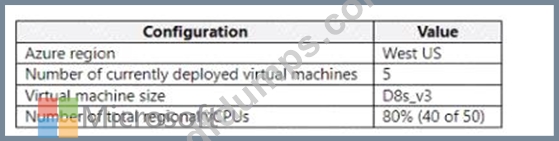
You plan to deploy a new host pool as shown in the following table.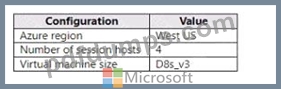
You need to ensure that you can deploy the host pool.
What should you do?
- A. Add a lock to the existing host pool.
- B. Stop and deallocate one of the currently deployed virtual machines.
- C. Submit a support request for service and subscription limits.
- D. Change the proposed virtual machine size for the session hosts to D4s_v3.
Answer: C
NEW QUESTION # 41
......
The AZ-140 exam is one of the newest certifications offered by Microsoft, and it reflects the growing importance of virtual desktop infrastructure (VDI) for modern organizations. As more businesses move their operations to the cloud, the demand for skilled professionals who can manage virtual desktop environments is increasing. By earning the AZ-140 certification, you can position yourself as an expert in Azure Virtual Desktop and differentiate yourself from other candidates in the job market.
Microsoft Certified Free Certification Exam Material from PDFDumps with 289 Questions: https://actualtorrent.pdfdumps.com/AZ-140-valid-exam.html