

CREST CCRTM-SC : CREST Certified Red Team Manager - Scenario

Exam Code: CCRTM-SC
Exam Name: CREST Certified Red Team Manager - Scenario
Updated: Sep 16, 2026
Q & A: 20 Questions and Answers
CCRTM-SC Free Demo download
Online support
Customer support will be provided all day long, so if you have any questions about CREST CCRTM-SC exam training pdf before payment, run into some technical problem or look for after-sale service, you can always come into us. Our team will answer your questions and solve your problems with great patience.
Instant Download: Our system will send you the CCRTM-SC braindumps files you purchase in mailbox in a minute after payment. (If not received within 12 hours, please contact us. Note: don't forget to check your spam.)
Free update for one year
Our CCRTM-SC : CREST Certified Red Team Manager - Scenario actual questions & answers will get updated from time to time to guarantee that customers can handle the exam more confidently and easily. We provide free update for our users within a year. The latest and updated CREST CCRTM-SC exam training pdf will be sent to your mailbox you left when you buy it. We will do our best to make our users satisfied with our products at reasonable price.
CCRTM-SC certificate is a window which job seekers can present their knowledge and capabilities that they possessed, society can obtain the information of candidates’ technology and skill levels through it as well. Due to the close combination between the CCRTM-SC certificate and specific requirements of the professional job position, CCRTM-SC : CREST Certified Red Team Manager - Scenario exam can reflect the practical technical standards and the ability of practice for the special occupation more directly and accurately in this field.
If you are still hesitating and wandering whether you need to take CCRTM-SC exam to get a certificate, you are wasting your time and losing the game at the beginning in the current society full of fierce competition. CREST CCRTM-SC exam training pdf is the best choice you can choose if you are afraid you have no enough time to prepare.

Full refund with failed exam transcript
Our CCRTM-SC actual pdf torrent is created aiming at helping our users to pass the exam with one shot. However, if you fail the exam regretfully, we promise you a full refund. So you have no reason to worry that you will waste your money if you still don’t get the CREST CCRTM-SC certificate after you buy it.
Instantly download after purchase
After payment, you will receive our email with the CREST CCRTM-SC actual questions & answers as the attachment within 5-10 minutes. You will only need to click the link to log-in, and then you can start to study with it.
Free demo
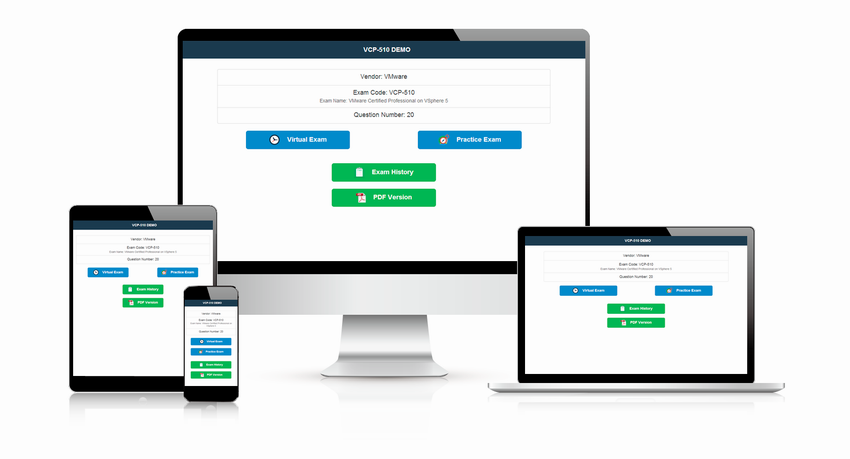
You may get hesitation if this CCRTM-SC exam training pdf is what you want and can really help you pass the CCRTM-SC exam before you make the decision to purchase it. We completely understand your scruple. In view of this point, we present our CCRTM-SC demo in three versions for free in our product page, therefore, you can get the access to part of the questions and also check the ways how the file present on your device.
CREST CCRTM-SC Exam Syllabus Topics:
| Section | Objectives |
|---|---|
| Red Team Engagement Management | - Threat Intelligence Interpretation & Application
|
CREST Certified Red Team Manager - Scenario Sample Questions:
Background: You are scoping a red team engagement for Kestrel Logistics Group, a large freight and warehousing company that has approached your firm directly (this is a voluntary, non-regulator-mandated engagement). During scoping workshops, Kestrel's IT Director is enthusiastic about maximum realism and requests that scope include the warehouse automation systems that control robotic pallet-moving equipment on the floor of their largest distribution centre, arguing "if an attacker could get in there, we need to know - plus it would make a great case study for our board." The systems in question are programmable logic controllers (PLCs) connected to a segregated operational technology (OT) network, with direct physical safety interlocks but a known history of the interlocks occasionally being manually overridden by floor staff during high-volume periods.
Separately, Kestrel's Head of HR asks whether the engagement's planned phishing simulation could specifically target "the three employees currently under a formal performance improvement plan in the finance team, since if they fall for it, it'll help build the case for their upcoming review." Kestrel's budget for the engagement is fixed and was set based on an initial, narrower scope discussion that did not include either the OT environment or an expanded phishing target list.
Question: How should you respond, during scoping, to (a) the request to include the warehouse robotic PLC/OT environment, and (b) the HR request regarding the three employees on a performance improvement plan?
Explain the scoping and ethical principles that should guide your response, and address the budget implication.
Correct Answer:
See The answer in Explanation part below.
Explanation:
Step 1 - Assess the OT/PLC request against life-safety risk principles. As covered in the scoping domain, systems with genuine life-safety implications require significantly enhanced caution. Here, the PLCs control physical robotic equipment with safety interlocks that are known to be manually overridden during busy periods - meaning the assumed safety margin is already weaker in practice than the engineering design intends. Live, unconstrained red team testing against this environment carries a real, non-trivial risk of triggering unsafe robotic behaviour at a moment when a human safety control may not be reliably in place.
This is precisely the kind of risk-benefit judgement call the syllabus emphasises: enthusiasm for realism does not outweigh a genuine, credible safety risk.
Step 2 - Do not simply accept or flatly refuse; investigate proportionate alternatives. The correct scoping response is not a binary yes/no delivered on the spot, but a structured risk conversation: you should explain the safety concern clearly to the IT Director, and propose involving Kestrel's own engineering/health-and- safety stakeholders (who were not present in this workshop) before any decision is made - consistent with the syllabus principle that OT/life-safety scoping decisions require input beyond IT alone. Proportionate alternatives to discuss could include: testing in a representative non-production/test-bed environment if one exists; a narrowly scoped, closely supervised assessment focused on the IT/OT boundary (e.g., segmentation controls) rather than live interaction with the PLCs themselves; or excluding live technical testing of the PLCs while instead reviewing configuration and architecture documentation to assess exposure without hands-on interaction.
Step 3 - Do not let "board case study" value override the risk assessment. The IT Director's stated motivation (a compelling board case study) is understandable but is not, on its own, a sufficient justification for accepting elevated safety risk - this is exactly the kind of scenario where a Red Team Manager must exercise independent professional judgement rather than simply satisfying an enthusiastic client stakeholder's preference.
Step 4 - Assess the HR request against fairness, proportionality, and data protection/employment principles.
Deliberately targeting three specific, named individuals who are already on a formal performance improvement plan, for the specific purpose of contributing to their performance review outcome, is a serious ethical and fairness problem. Simulated phishing exercises exist to assess and improve organisational security awareness and controls, not to be repurposed as a covert input into individual disciplinary or performance management processes against specific, already-vulnerable staff. This also raises genuine data protection and, depending on jurisdiction, employment law concerns (as discussed in the legal considerations domain regarding employee monitoring/testing), since using engagement data this way was not the stated, transparent purpose of the exercise and could constitute unfair or incompatible processing of personal data relating to those individuals.
Step 5 - Decline the HR request clearly, and explain why. You should decline this request professionally but firmly, explaining that simulated phishing must be designed and used for legitimate organisational security improvement purposes, applied consistently (for example, across a representative sample or the whole relevant population) rather than to covertly target specific named individuals for a disciplinary purpose, and that using it this way would be inappropriate, potentially unlawful, and would undermine trust in the security awareness programme generally if it became known. You should offer an appropriate alternative: a properly designed phishing simulation covering the finance team (or a representative sample of the organisation) as a whole, with aggregated, appropriately anonymised reporting used to inform organisation-wide awareness training - not individual disciplinary outcomes.
Step 6 - Address the budget implication transparently. Both the OT/PLC consideration (which may require additional stakeholder engagement time and possibly a different testing approach) and any legitimate broadening of the phishing scope have resourcing implications beyond the original, narrower budget assumption. Consistent with the scoping domain's guidance on budget/scope/objective mismatches, you should raise this transparently with Kestrel: rather than silently absorbing the extra scope within a fixed budget (risking rushed, lower-quality delivery) or simply refusing to discuss it further, present the client with clear options - an adjusted budget or timeline to properly and safely accommodate a reasonable OT- boundary assessment, or confirmation that OT remains out of scope for this engagement given budget constraints, with the safety-driven rationale documented either way.
Conclusion: The OT/PLC request requires a proportionate, safety-led scoping conversation involving the right stakeholders, likely resulting in a scaled-back or alternative approach rather than full live testing given the known interlock override risk; the HR request should be declined on ethical, fairness, and data protection grounds, with a legitimate alternative offered; and both scope changes should be reconciled transparently against the fixed budget rather than absorbed silently.
---
Background: You are finalising the closure deliverables for a red team engagement against Ellerslie Manufacturing Corp. Your draft report contains fourteen findings, including two rated "Critical." During internal quality assurance review (conducted by a senior colleague independent of the delivery team, per your firm's standard process), the reviewer flags that one of the two "Critical" findings - successful lateral movement into the finance domain via a legacy, unpatched protocol - was, in fact, detected by Ellerslie's Blue Team within eleven minutes, and a partially effective containment action was taken within twenty-five minutes, though the Red Team's activity logs show the team was able to continue limited further activity for a period after that using a separate, undetected foothold established earlier.
Your original draft report described this finding's risk rating based purely on the technical severity of the vulnerability exploited, without reference to the fact that it was actually detected and partially contained reasonably quickly. Separately, the client's Head of Finance, upon hearing informally (before the report is finalised) that "the finance domain was compromised," has already begun asking pointed questions in an internal finance-team meeting about "whether our financial systems were breached," creating some internal anxiety ahead of the formal closure briefing.
Question: Explain what changes, if any, you should make to the report based on the QA reviewer's feedback, and how you should handle the Head of Finance's premature, informal awareness of the finding ahead of the planned closure briefing.
Correct Answer:
See The answer in Explanation part below.
Explanation:
Step 1 - Recognise the QA reviewer has identified a genuine reporting quality gap. Consistent with the reporting domain's principle that risk ratings should reflect genuine business impact and full context (not technical severity considered in isolation), the original draft's rating based purely on technical severity - while not factually inaccurate about the vulnerability itself - provides an incomplete picture by omitting the fact that Ellerslie's own detection and partial containment capability actually worked reasonably quickly. This omission risks either overstating the organisation's real residual risk (if containment was genuinely effective) or, just as importantly, failing to give Ellerslie credit for a detection/response capability that did function, which is itself valuable, actionable information about what is working, not just what is broken.
Step 2 - Revise the finding to reflect the full, accurate picture. The finding should be revised to include the complete, accurate narrative: the technical vulnerability and successful initial lateral movement (which remains a genuine, valid, significant finding warranting a high rating, since real access was achieved), alongside the factual detail that detection occurred within eleven minutes and partial containment within twenty-five minutes - and, critically, the further fact that the Red Team was able to continue limited activity afterward via a separate, undetected foothold, which is itself an important, distinct sub-finding about the limits of the partial containment action (it addressed one avenue but not a parallel one). This is not a case of softening the finding to protect the client's feelings (which would breach the objectivity principle discussed elsewhere in this practice set) - it is a case of correcting an incomplete draft to reflect the full, accurate, evidence-based picture, which happens to include both a genuine weakness (initial compromise, and a containment gap regarding the parallel foothold) and a genuine strength (reasonably fast detection and partial response) side by side.
Step 3 - Reassess the risk rating based on the complete picture, not simply lower it by default. The revised rating should be reached through fresh, honest analysis of the complete picture, not by mechanically downgrading the finding just because some detection occurred - the continued, undetected activity via the separate foothold means genuine residual risk remains significant, and the rating should reflect that reality accurately, whatever specific level that turns out to be, rather than either the original technical-severity-only inflation or an inappropriate deflation now that partial detection is known.
Step 4 - Thank and act on the QA reviewer's input as the system working as intended. This is a good, concrete illustration of why independent internal quality assurance review matters, as discussed in the governance domain: it caught a genuine, material gap in reporting completeness before the report reached the client, which is exactly its purpose - and you should treat this constructively as the QA process succeeding, not as criticism to be defensive about.
Step 5 - Address the Head of Finance's premature, informal awareness directly and promptly. The fact that partial, informal, and (per the scenario) somewhat alarming information ("the finance domain was compromised") has already begun circulating internally ahead of the planned closure briefing is a live communication risk that should not simply be left until the scheduled briefing date. Consistent with the syllabus principle on proactive, transparent client communication, you should raise this promptly with the Control Group: informing them that this partial information appears to have leaked informally and is causing some internal anxiety, and discussing whether an earlier, appropriately scoped, accurate communication to relevant stakeholders (potentially including a brief, factual clarification to the Head of Finance specifically, coordinated through the Control Group rather than delivered unilaterally by you) would help correct any premature or exaggerated impression before the full closure briefing, rather than allowing an inaccurate or incomplete picture to circulate and harden in the meantime.
Step 6 - Ensure any early clarification is accurate and consistent with the eventual full report, without pre- empting the formal briefing inappropriately. Any interim communication should be carefully calibrated:
accurate and reassuring where the facts genuinely support reassurance (e.g., confirming detection did occur reasonably quickly), while not overstating containment given the continued undetected activity finding, and should be coordinated with and approved by the Control Group rather than improvised informally, so that the eventual formal closure briefing remains consistent with, and simply elaborates on, what has already been accurately communicated.
Step 7 - Draw the broader lesson. This scenario illustrates two connected principles central to this domain:
that accurate, complete, properly-contextualised risk reporting (neither inflated nor artificially softened) depends on genuine independent quality assurance review catching gaps before delivery, and that proactive, honest, appropriately governed communication is essential not only in the formal report itself but throughout the closure period, especially once informal, partial information has begun to circulate and create anxiety that inaccurate rumour could otherwise make worse.
Conclusion: The finding should be revised to include the full, accurate context (both the genuine initial compromise and continued undetected activity, and the genuinely fast detection and partial containment), with the risk rating reassessed honestly on that complete picture rather than adjusted in either direction for the wrong reasons; and the Head of Finance's premature, informal awareness should be addressed promptly and transparently through the Control Group with an accurate, appropriately scoped interim clarification, rather than left unaddressed until the originally scheduled closure briefing.

No help, Full refund!
PDFDumps confidently stands behind all its offerings by giving Unconditional "No help, Full refund" Guarantee. Since the time our operations started we have never seen people report failure in the CREST CCRTM-SC exam after using our products. With this feedback we can assure you of the benefits that you will get from our products and the high probability of clearing the CREST CCRTM-SC exam.
We still understand the effort, time, and money you will invest in preparing for your certification exam, which makes failure in the CCRTM-SC exam really painful and disappointing. Although we cannot reduce your pain and disappointment but we can certainly share with you the financial loss.
This means that if due to any reason you are not able to pass theactual CREST CCRTM-SC exam even after using our product, we will reimburse the full amount you spent on our products. you just need to mail us your score report along with your account information to address listed below within 7 days after your unqualified certificate came out.


Over 21594+ Satisfied Customers
 2 Customer ReviewsCustomers Feedback (* Some similar or old comments have been hidden.)
If anyone wants to benefit from these incredible CCRTM-SC products.
Christ

It is a pretty solid CCRTM-SC study file and questions were pretty much the same on my exam. I passed CCRTM-SC yesterday.
Dwight

Why Choose PDFDumps

Quality and Value
PDFDumps Practice Exams are written to the highest standards of technical accuracy, using only certified subject matter experts and published authors for development - no all vce.

Tested and Approved
We are committed to the process of vendor and third party approvals. We believe professionals and executives alike deserve the confidence of quality coverage these authorizations provide.

Easy to Pass
If you prepare for the exams using our PDFDumps testing engine, It is easy to succeed for all certifications in the first attempt. You don't have to deal with all dumps or any free torrent / rapidshare all stuff.

Try Before Buy
PDFDumps offers free demo of each product. You can check out the interface, question quality and usability of our practice exams before you decide to buy.
Our Clients












Updated Pdf Study Questions & Free Download Demo is the Reliable Study Material for you to rely on. Free try the Pdf Demo for a pre-test and choose our Exam Study Pdf Torrent for successfully pass. 100% Pass is the guarantee of our Exam Practice Material.
Latest PDF Dumps
- H19-110_V2.0 valid pdf dumpsMay 28, 2022
- IIA-CIA-Part3-CN valid pdf dumpsMay 28, 2022
- NS0-516 valid pdf dumpsMay 28, 2022
- GH-600 valid pdf dumpsMay 28, 2022
Contact Us
From Monday to Saturday
Support: Contact now
If you have any question please leave me your email address, we will reply and send email to you in 12 hours.
Copyright © 2026 PDFDumps NETWORK CO.,LIMITED. All Rights Reserved. All trademarks used are properties of their respective owners. Privacy Policy